
:quality(70)/cloudfront-us-east-1.images.arcpublishing.com/mco/T56ADX64ANDYNP5MWRKCULXRZA.jpg "Navajo Code Talker Samuel Sandoval dies")

:quality(70)/cloudfront-us-east-1.images.arcpublishing.com/mco/QBYJTGYCQBHSVITAL32RAO7HAA.jpg "Veteran honored for once-secret role in WWII ‘Ghost Army’")



:quality(70)/cloudfront-us-east-1.images.arcpublishing.com/mco/YVREBMCGTNFNTI6PSBKVQDR7CU.jpg "Coast Guard veteran held without bail in ID theft mystery")



[ad_1]
Ukraine is upending a lot of assumptions about how future wars will look. While tactical lessons will be useful as U.S. services prioritize acquisitions and modify their doctrine, the strategic lessons are far more important.
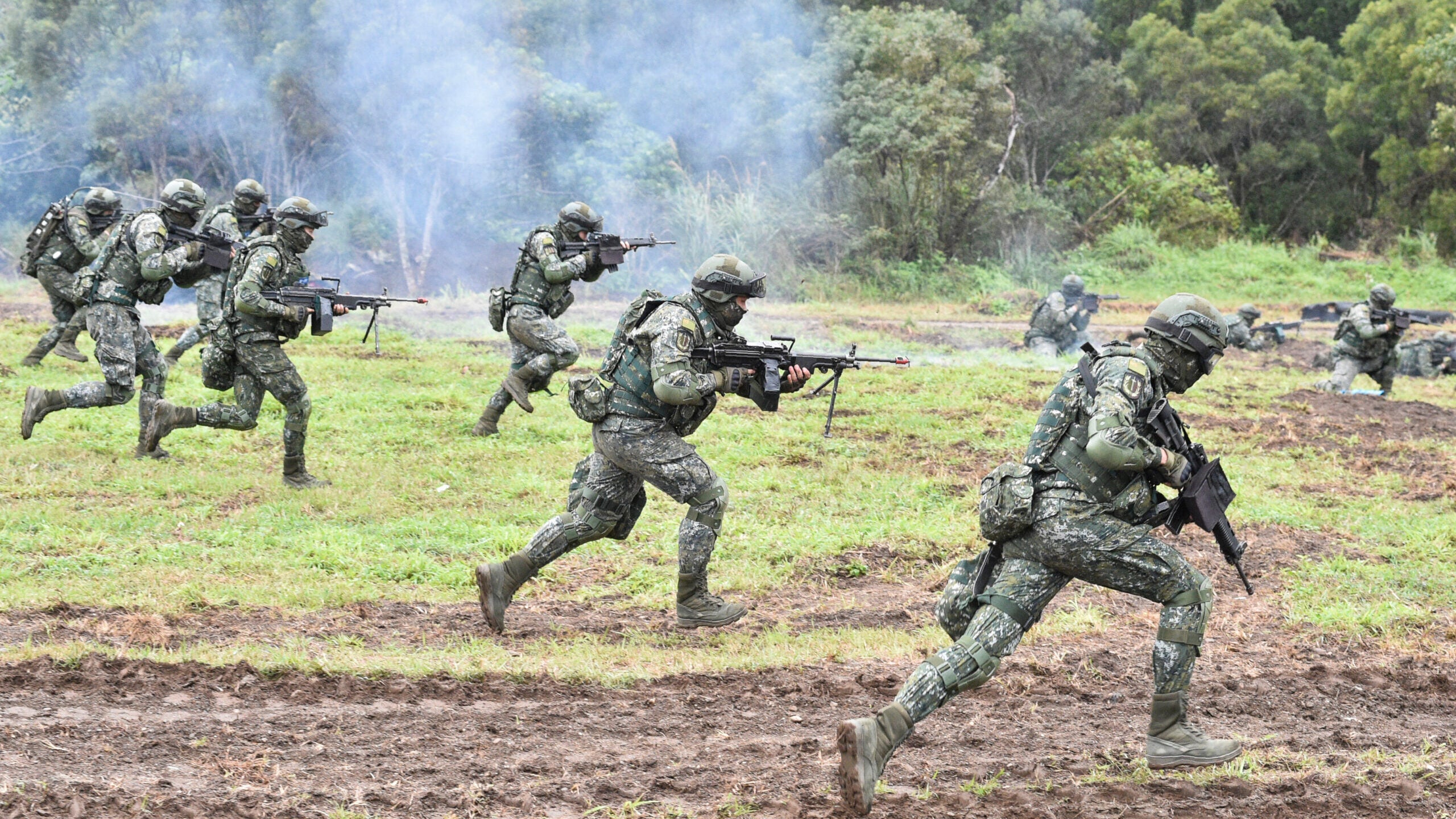
If the U.S. cannot deter China from attacking Taiwan and other territories in the South China Sea, the main reason won’t be related to Marine Force Design 2030, Navy Distributed Maritime Operations, or any particular operational plan. It will have to do with America’s lack of willingness or ability to meet the immense economic and materiel requirements of a huge conflict that could last months.
Ukraine is revealing the future of war
Since the end of World War II, many people have assumed that any great power conflict would be short, intense, and over quickly, one way or another. In Ukraine, that model is falling apart. Analysts thought Russia would be able to launch lighting strikes on key objectives in Ukraine, decapitate Ukraine’s civilian leadership, and rapidly consolidate its gains.
Instead, a combination of Russian incompetence and Ukrainian courage saw that plan fall apart more quickly than Boris Yeltsin at a vodka tasting. The war has become a months-long slog with no end in sight. It is the type of war the U.S. has sought to avoid for its military since at least the 1980s — one with battles of attrition where each side tries to grind the other to dust.
In this war, Russia has an enormous stockpile of weapons and materiel, some dating back to the 1960s, that it’s been forced to throw into the fire. The size of that stockpile partially mitigates the fact that it boasts little indigenous manufacturing capability and sanctions prevent it from getting fresh supplies.
Ukraine had far less of a stockpile than the Russians but was soon able to tap into Western reserves — first vintage Soviet hardware from the former Warsaw Pact, then a cornucopia of NATO gear. Despite Herculean efforts from the U.S. and NATO, supplies are insufficient to meet Ukraine’s needs — and the war is likely closer to the beginning than the end.
Even that small war is exposing our weaknesses
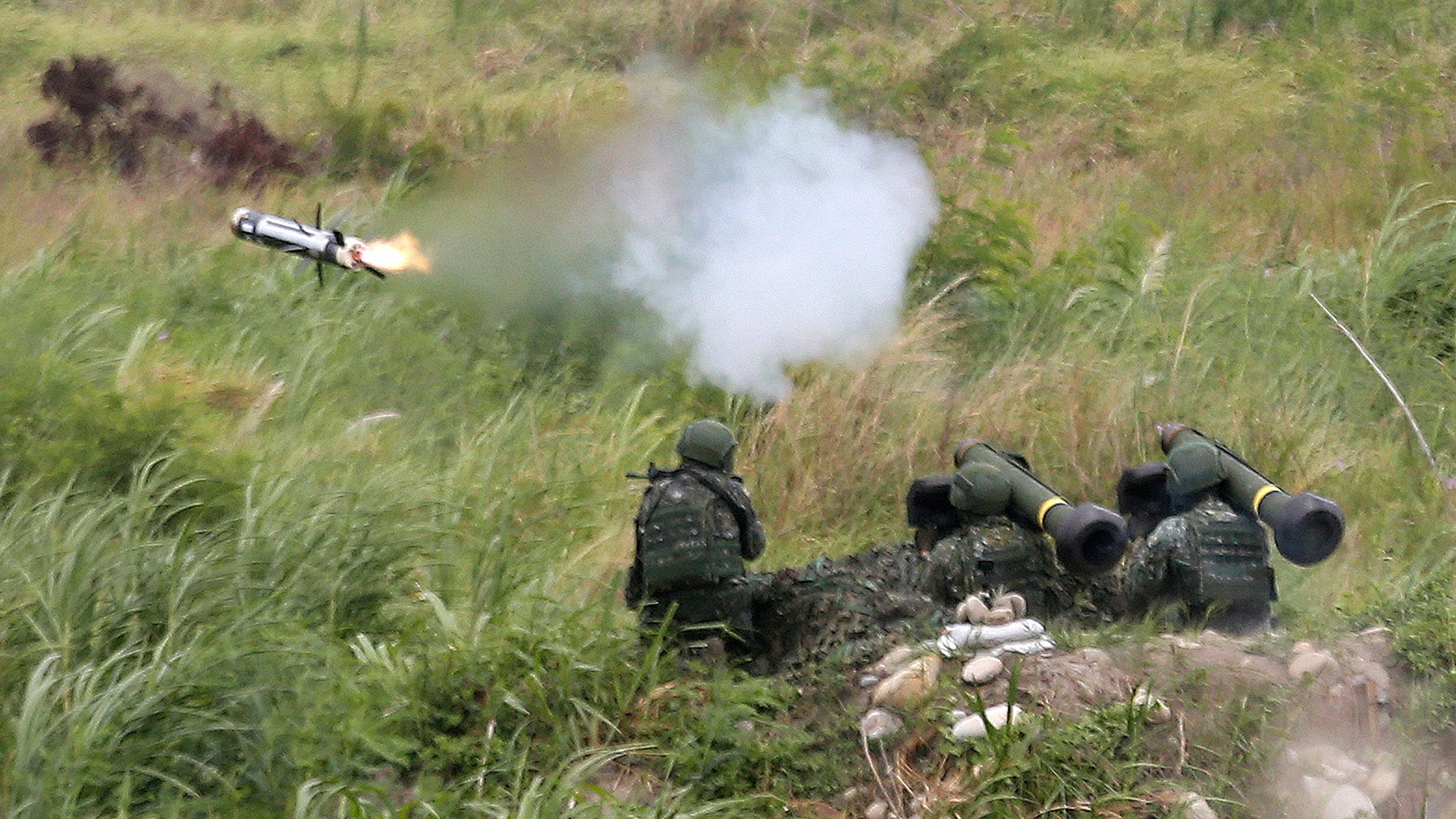
The U.S. is already running low on Stinger and Javelin missiles. If it weren’t for unused Excess Defense Articles (EDA) like M113 armored personnel carriers and M777 howitzers, the U.S. would be hard pressed to help in many other categories of weapons and ordnance. The war is chewing up gear at an amazing rate. It will take years for the U.S. and NATO to recapitalize their stocks. By way of example, Ukraine has already received 5,500 Javelins and used most of them. The current capacity for building new Javelins is only 1,000 per year.
Yet the war in Ukraine would be dwarfed by any conflict between the U.S. and China. To give some sense of scale, before the conflict, Russia had a GDP of $1.78 trillion and 1.35 million men under arms against Ukraine’s $200 billion and 500,000 troops. By comparison, China fields 4 million under arms and an economy of $17.7 trillion versus America’s 2.1 million and GDP of $23 trillion.
This would be a clash of the titans. The amount of ordnance consumed in a war with China would be unprecedented since the end of WWII, and the U.S. will use more than man-portable missile systems. It will need high-end weapons systems like Tomahawks, Naval Strike Missiles, SM-6s, and Advanced Medium-Range Air-to-Air Missiles — all far harder to replace than Stingers and Javelins.
Generally, these types of systems are built in lots rather than continuously. Even if the production line is hot, the lead times for key components to produce more than the preplanned quantity can be months or years.
Just as importantly, where do those components come from? In a war in the South China Sea, it’s also likely that supplies coming from Asia would be severely disrupted by threats to commercial shipping — far more than we’ve seen from COVID. Taiwan, for example, is a major source of semiconductors, and it’s unlikely they’ll be doing business as usual in the middle of a war with China. Even though China may not supply military equipment and parts to the U.S., military and civilian needs would clash as each competed for key supplies.
Measures such as the Defense Production Act could mitigate some direct impacts on military supply chains, but that would further amplify the disruption to civilian businesses. That will cause an economic catastrophe that will make us nostalgic for the mild inflationary fallout we’ve seen from Ukraine. The economic impact alone could quickly dissolve the American public’s will to fight for the sake of small Pacific islands thousands of miles away.
That economic disruption would also dramatically reduce the tax revenue available to the U.S. government. Government expenses would already be skyrocketing because of the war. The budget deficit, already too large, would balloon as revenue and expenses diverged. And who’s going to bankroll a country’s debt in economic contraction? Not most private investors, not Asian countries like Japan, who will have their own problems with China on the warpath, and certainly not our usual biggest creditor — China. If the U.S. can’t borrow enough to service its existing debt, the economic contraction would become a complete collapse.
The longer the war goes on, the worse all these problems get.
We are not focused on the real issue
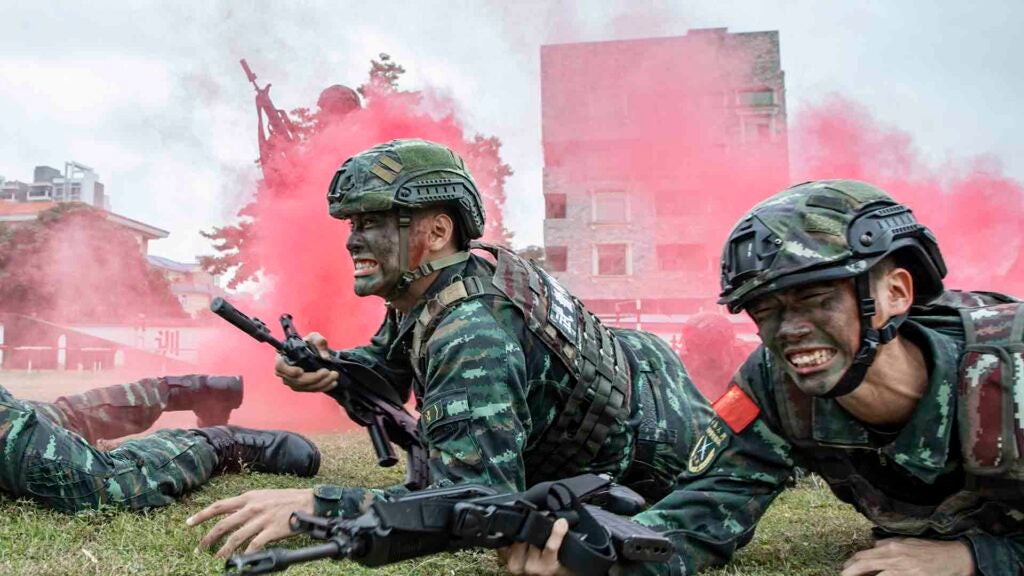
Arguments about defending Taiwan or deterring Chinese aggression often center around which weapons systems to fund or what operational plans should include. Those are worthwhile debates, but a larger discussion needs to happen.
The U.S. military’s strength relative to China is inadequate to deter aggression and the situation is only worsening. China already had a quantitative advantage over the U.S., but is rapidly closing in on the qualitative front as well, with advances in key technologies such as hypersonics. China is on track to match the U.S. defense budget. Any comparison also has to include the fact that U.S. forces are deployed and stationed worldwide. In contrast, China is far more localized and able to concentrate its combat power on its regional objectives.
This is going to take substantial investment to fix. In particular, our magazines of precision-guided munitions of all types are grossly inadequate. Those stockpiles must be increased in advance of any conflict. In addition, given the increased likelihood of a long war, the U.S. must be prepared to build replacements for military equipment and weapons expended or destroyed in combat. Right now, once the program of record for a system is complete, the specialized tools for manufacturing are often destroyed and the workers laid off. It’s simply the cheapest thing to do.
If we are serious about being able to fight China, essential production lines will need to stay hot, either by continuing to build the minimum economic quantity of these systems indefinitely or by paying money to keep lines ready for a restart. That will require significant ongoing investments.
Weathering the economic storm and supply chain disruption accompanying such a war will require onshoring much of the civilian industrial base that has relocated overseas over the past several decades, especially for critical items. This will require a combination of tariffs, incentives, and subsidies, all of which will hit the U.S. Government and the American people in the pocketbook.
Lastly, while spending all that money on defense and the industrial base, the U.S. Government has to get its overall budget under control. We are now facing a national defense vulnerability due to our borrowing needs. Just like a family deeply in debt, our precarious national finances leave us poorly prepared to deal with major emergencies — in this case, military conflict with peer competitors. Our unpaid bill of $30 trillion and rising means far higher taxes and far fewer government services if we hope to get control of the debt.
A cliché is used far too often: “Freedom isn’t free.” But when people are asked to actually pay for freedom — not with their lives, just with their dollars and cents — competing priorities suddenly appear. If we are serious about being a world power and standing up for freedom, then we need to pay the bill.
If not, then we need to be honest and admit that President Kennedy’s “…pay any price, bear any burden, meet any hardship, support any friend, oppose any foe to assure the survival and success of liberty” was all just marketing. China will see the truth either way, whether we admit it or not.
+++
Carl Forsling is a retired Marine officer and V-22 pilot who writes on military and national security issues. He lives in the Dallas-Fort Worth area.
The latest on Task & Purpose
Want to write for Task & Purpose? Click here. Or check out the latest stories on our homepage.
[ad_2]
Source link

